
How often does your company fail to deliver on its promises? How much time do you spend on training new employees or updating your processes? Does your company suffer from poor customer service? If you answered yes to any of these questions, then you might want to read this article.

Behavioural economics is a branch of economics that studies human behaviour and decision-making. The field aims at understanding why humans behave the way they do and how individuals act differently in different situations.
This article explains seven principles of behavioural economics that can transform your business. These principles include scarcity, loss aversion, status quo bias, social proof, anchoring, mental accounting, and framing. Read on to discover how you can make them work for you.
Behavioural economics is the economic theory that studies why customers choose to act a certain way. It helps marketers understand what influences their decision-making processes. Marketing is about ensuring consumers choose your company over competitors. Behavioural economists help us understand why certain packaging or sales funnels work, why customers will choose one product over another and how to leverage what we know from this field to increase sales.
There are many different theories about why we behave the way we do. Some of them are very well established while others are still under development. We will look at 6 key areas of behavioural economics that you've probably already seen used in marketing without realising it.
Marketers often use psychological techniques to influence consumer behaviour. These techniques include the use of frames, choice sets, and positioning. Framing refers to how a product or service is presented. Choice sets refer to the number of options available to a consumer. Positioning refers to how a brand is positioned relative to competitors and other brands.
Let's take a look at each of these three terms to see how they're used in marketing.
A choice set refers to the number of choices available to a consumer. Most people have a limited amount of attention, so if there are too many options, they'll miss out on some important information. For example, imagine you went shopping for a new car. You could go through dozens of models until you find something you like. Would you really be able to remember all those details when you get inside the car? Probably not. This means you need to limit your choice set to only a few options.
When choosing which products to buy, consumers often focus on price, but not exclusively. They also focus on brand name and market position. You may even consider quality as an additional factor in making a purchase.
Most consumers don't focus solely on price. Instead, they look at a variety of factors before buying a product or service.
When a brand has more than one competitor, they compete against each other based on several criteria including price, features, availability, and convenience. However, companies rarely think about their position in relation to their competitors. They usually focus on their own strengths and weaknesses instead.
Positioning refers to where a brand stands in relation to competitors. A simple example would be Coke vs Pepsi. Since 2004, Coca-Cola Company has been the market leader despite a brand value decline of 13% in 2021. This means, when you ask for a soft drink, you are more likely to ask for a coke than Pepsi, regardless of your preferred choice.
But, smart marketers will understand the market position their brand is in and turn a positive into a negative with framing...
Framing describes how a message is presented. Consumers can't always tell whether a frame is good or bad. Sometimes, they might just assume the frame is neutral and then interpret the content differently. Let's say you were given $10 to spend on any restaurant. If you read the menu, it says "Fresh Salmon". Does this mean the salmon was caught yesterday? Or does it mean the salmon is fresh enough to eat today?
You might assume the frame is neutral. But what happens when you learn the actual meaning behind the words? In the latter case, the frame is negative because 'fresh enough to eat' implies old food.
This is why it's important to make sure your frames are clearly understood by your target.
One company that was very smart about framing its position in a market was Avis.

In 1962, Avis needed a brand new advertising campaign so they turned to the ad agency, Doyle Dane Bernbach. The car rental company had been trailing behind market leader Hertz since its inception. So the ad agency decided to embrace Avis' second-place status as an effective way to promote its customer service and came up with...
"When you’re only No. 2, you try harder."
The advert was an instant hit and by embracing its second-place position, Avis began to outperform Hertz.
So, sometimes, the best thing to do is to simply accept your current position in a market.
Remember, Positioning & Framing isn't a zero-sum game. When you're more honest with yourself about your positioning, you can actually benefit by using smart framing.
Consumers are influenced by the first piece of information they see, even if it doesn't make sense. A marketer might suggest a product at a higher price than competitors because they think it looks better or feels better. That might encourage consumers to purchase the item, even though it's actually less attractive than others.
Think about the luxury market. You may not know much about handbags but you probably have some idea of the brands like Louis Vuitton, Gucci, Prada and Chanel. These brands are known for high-quality designs, luxurious materials, and expensive prices.
Part of what makes a product a luxury is the price you are charged for it. That price anchors our perceptions of the rest of the market. We assume that a brand is charging a lot of money because it has already hit that luxury ceiling.
That might bring in fewer sales but it can also bring in more revenue.

You will have come across this before if you've done any form of marketing.
Customers can’t always tell if a product is right for them unless they try it out. To get customers to try something, marketers need to give them an incentive to buy.
Social proof can help convince customers to buy products when they see other people buying those products. For example, if you sell a high-end watch, you can show pictures of celebrities wearing the same brand of watch. People will feel like they belong in the crowd if they wear the same thing.
Another way to use social proof is to create a sense of urgency. If you offer a free trial period, you can use social proof to encourage people to sign up. You could even ask them to share their experience with friends to get more sales.
In internet marketing, an essential element of a sales page are the testimonials people share about a product. They help convince people that the decision they are making is a good one, that they can 'follow the herd,' as it were.
People are more likely to spend money to avoid losing something than to get something. This is why limited discounts and sales work so well...
Understanding the emotional component of risk-taking is important to improving the customer experience and ensuring that customers feel satisfied with the product or service they receive.
Marketers should be aware that consumers are more concerned about avoiding losses than achieving gains. Consumers may be more motivated to buy a product if they think it will prevent them from experiencing negative emotions associated with losing something.
The key here is to understand how your customers perceive losses and gains, and then design a strategy to minimize these losses.
Customisation can help create a stronger bond between consumers and brands. Consumers will feel more emotionally attached to products they own because they see themselves in them. We call this The Endowment Effect...
This ownership can come in many forms. It could be through a branded app, or a website. But it's a powerful emotion that needs to be harnessed by businesses.
Customisation creates a lasting feeling of connection between a consumer and a brand, which can lead to repeat purchases.
How do we make sure our websites, apps, emails and other digital platforms are customisable enough to satisfy our users?
A great example of the endowment effect is the way that fans feel about their fandoms. Fans will often pay for merchandise simply to connect with fellow fans.
When designing new content for your business, consider what makes your audience tick. Does your company produce anything that appeals to people on an emotional level?
Emotional connections can be extremely strong, especially among younger generations.
Defaults are pre-set options consumers receive. In many cases, they can opt-out of defaults but the likelihood is, customers won't.
Consumers would rather avoid losing things than take a risk for a gain, they are unlikely to defect from a default option.
Furthermore, if marketers give them that default option, they are helping to define the customer's ownership of the default, making them value that option more and is less likely to part with it.
Marketers can use defaults to persuade customers to receive email updates and offers but should be careful not to opt customers into so many options that they feel taken advantage of.
When consumers have too many options, they may feel overwhelmed and unable to make an informed decision. Consumers often end up buying something that isn't right for them because they were not given enough information.
A study found that shoppers who had a smaller number of choices were more likely to make a purchase. When consumers have too many choices, they may also experience decision-making paralysis.
For example, if you're trying to pick a flavour of ice cream, you may end up choosing the wrong one simply because there are so many flavours available.
You may also find that people 'default' to what they are familiar with, so if you're trying to sell different options to people, you don't want to give them too many alternatives. A good rule of thumb is that you should be able to glance at your options. This is something used to great effect at coffee houses.
There are over 87,000 different drink combinations at Starbucks, but you wouldn't know it if you just walked in through the door.
Rather, Starbucks uses a series of menus to guide customers through the decision-making process, making sure the customer gets what they want without overwhelming them in the process.
In the real world, consumers are often faced with many choices. When making purchases, they may consider price, quality, brand, availability, convenience, and other factors. But sometimes, even though there are many options available, they still prefer one product over others.
Ian Bateman, Alistair Munro and Gregory Poe found customers are more likely to choose a more expensive pen over $6 in cash if a third, less expensive pen is introduced.
"You can actually introduce products into the market that nobody chooses but nevertheless have effect on what people end up getting," Source: skyword.com
This is used to great effect in online pricing tables where customers are offered 3 different subscription options with one being the "Best Deal."
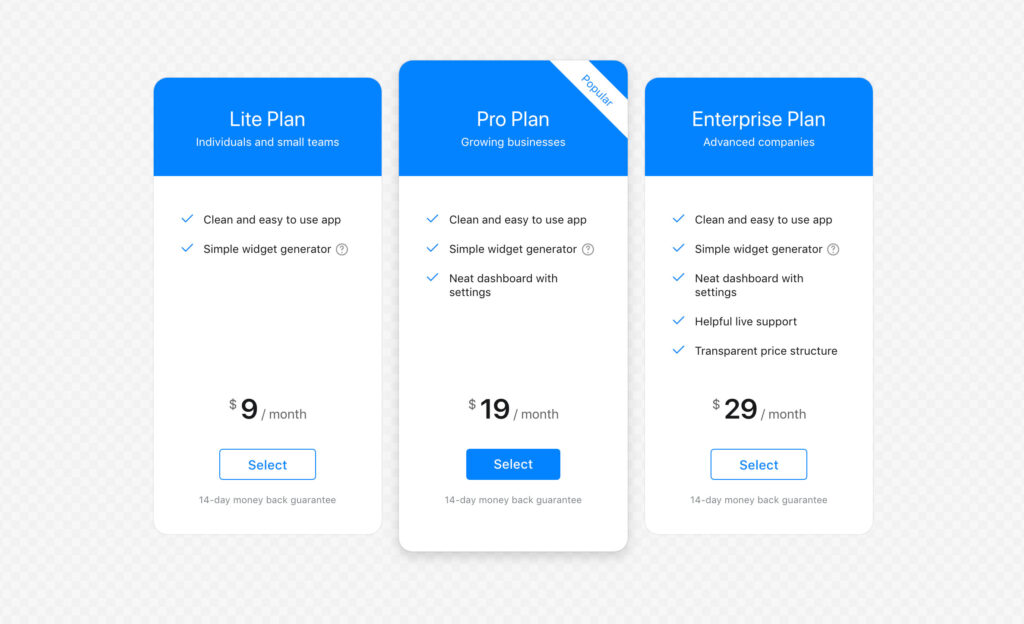
It is, of course, the marketers' hope that customers chose that deal over the cheaper first option. The third, more expensive option is included for customers to reject because it is "too expensive" and the lower-priced option is included for customers to reject because it is "too restrictive."
This is also known as the Goldilocks effect.
The above principles will help you understand how consumer behaviour works, enabling you to create successful marketing campaigns and increase sales.
Understanding behavioural economics will also enable you to overcome some common objections when talking about advertising or selling.
If you'd like to read more about this fascinating topic, I can thoroughly recommend Rory Stewart's book: Alchemy: The Surprising Power of Ideas That Don't Make Sense.

